One of the first things I tell my patients when they find out they're pregnant is this: pregnancy is not a disease. Your body is doing something extraordinary, growing a whole human being, but that does not mean you are fragile, broken, or untouchable.
And yet, I see it in my clinic every single week. Women sitting across from me with a cold they've had for ten days, eyes watering, voice gone, completely exhausted, because they were too afraid to take so much as a paracetamol. Women clutching their stomachs through heartburn that hasn't let them sleep, surviving on plain roti and prayer, because no one told them what they could safely take.
That fear is understandable. When you're carrying another life inside you, every decision feels enormous. But suffering unnecessarily is not the same as being careful. And that is exactly what this blog is about.
"Suffering unnecessarily is not the same as being careful."- Dr. Anam Ghani, Women's Health Specialist, Gurugram
First, The Most Important Rule

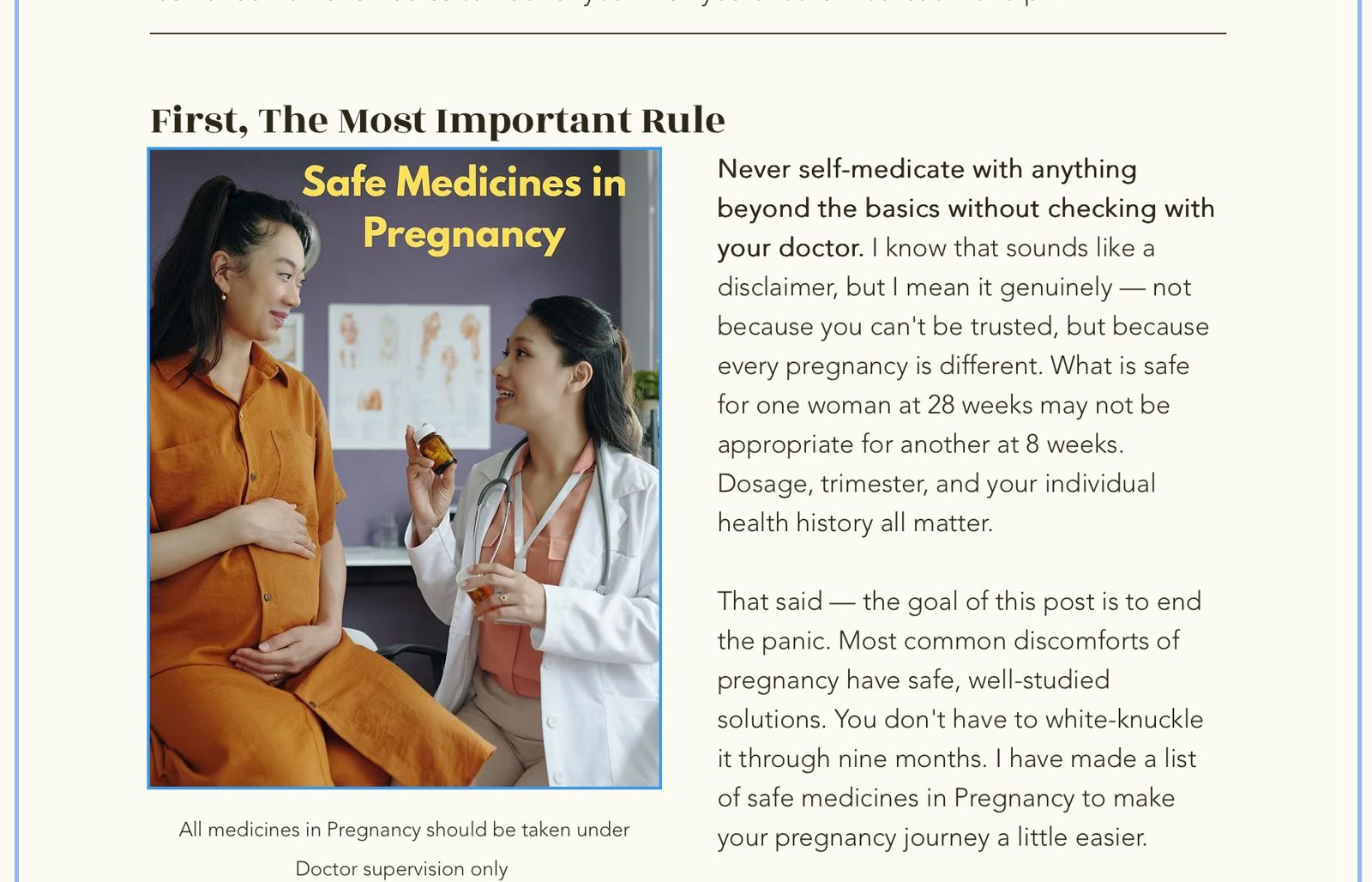
Every medicine decision in pregnancy should involve your doctor, for your safety and your baby's.
Never self-medicate with anything beyond the basics without checking with your doctor. I know that sounds like a disclaimer, but I mean it, not because you can't be trusted, but because every pregnancy is different. What is safe for one woman at 28 weeks may not be appropriate for another at 8 weeks. Dosage, trimester, and your individual health history all matter.
That said, the goal of this post is to end the panic. Most common discomforts of pregnancy have safe, well-studied solutions. You don't have to white-knuckle it through nine months. I have made a list of safe medicines in Pregnancy to make your pregnancy journey a little easier.
Safe Medicines in Pregnancy: Category by Category
1. Pain and Fever, Paracetamol (Crocin, Calpol)
Paracetamol is the most widely used and most studied pain reliever in pregnancy. At the standard recommended dose, it is considered safe across all three trimesters.
Safe for
Headaches, mild fever, body ache, dental pain.
What to Avoid
Ibuprofen (Brufen, Combiflam) and aspirin, especially in the third trimester. These belong to a class called NSAIDs and can affect fetal kidney development and cause complications near delivery.
2. Nausea and Vomiting, Doxylamine + B6
Morning sickness is the most Googled pregnancy complaint in the world, and for good reason. It is relentless, it is exhausting, and it does not always stay in the morning.
Safe for
Nausea, vomiting, especially in the first trimester.
Doxylamine combined with Vitamin B6 has been used safely for decades. Ondansetron (Emeset) is also commonly prescribed for severe nausea but should only be taken under a doctor's guidance, not self-prescribed.
3. Heartburn and Acidity, Antacids
Heartburn is almost a rite of passage in pregnancy, especially from the second trimester onward as your uterus puts pressure on your stomach.
Safe for
Acidity, heartburn, reflux.
Antacids containing calcium carbonate or magnesium hydroxide (like Gelusil, Digene, or Eno in small quantities) are generally considered safe. However, avoid antacids with sodium bicarbonate in large amounts as they can cause fluid retention. Omeprazole (PAN, OMEZ) is another safe option frequently prescribed during pregnancy for persistent acidity.
4. Iron and Folic Acid Supplements
These are not optional. These are essential.
Folic acid (ideally started before conception and continued through the first trimester) reduces the risk of neural tube defects. Iron supplements are routinely prescribed to prevent and treat anaemia, which is extremely common in Indian pregnant women due to dietary patterns.
5. Constipation, Isabgol (Psyllium Husk) and Stool Softeners
Pregnancy hormones slow down your gut. Constipation is almost universal.
Safe Options
Isabgol (Sat isabgol) with water is completely safe and highly effective. Lactulose syrup is also safe and commonly prescribed. Stimulant laxatives like senna should only be used short-term and under guidance.
6. Cough and Cold, Proceed Carefully
This is where I urge the most caution. Most cough syrups available over the counter in India contain a cocktail of ingredients, decongestants, antihistamines, expectorants, many of which are not well-studied in pregnancy.
Safe
Steam inhalation, saline nasal drops, honey (after the first trimester).
If You Need Medication
Plain guaifenesin (expectorant) in the second and third trimester is generally considered acceptable. Avoid cough syrups with pseudoephedrine, phenylephrine, or alcohol base. For allergies: Cetirizine (Cetzine) is the antihistamine with the most safety data in pregnancy and is widely used.
Do Not Take
Combination cold tablets without checking the ingredient list. Always read the label or call me.
7. Skin and Topical Applications
Avoid strong retinoids (Vitamin A derivatives found in many anti-acne creams). Most mild moisturisers, coconut oil, and calamine lotion are fine. If you have a skin concern during pregnancy, get a prescription rather than using your old skincare products.
Home Remedies That Actually Work
Now, before you think I'm only going to hand you a prescription, let me tell you that some of the most effective remedies for pregnancy discomfort come from the kitchen. I tell my patients this all the time. Our dadi-nani were not wrong about everything.
Ginger has genuine clinical evidence behind it. Adrak chai (ginger tea with minimal sugar), ginger candy, or even just sniffing fresh ginger can reduce nausea. Eating small, frequent meals, every 2 hours, matters more than you think. An empty stomach makes nausea dramatically worse.
Cold milk (without sugar) provides instant relief for many women. Eating slowly, not lying down for at least 30 minutes after meals, and avoiding fried, spicy food, especially at dinner, makes a significant difference. Elevating the head of your bed slightly also helps if nighttime reflux is disturbing your sleep.
Water. Genuinely, most pregnancy constipation improves dramatically with adequate hydration (2.5 to 3 litres a day) combined with fibre. Papaya (ripe, not raw), prunes, and leafy vegetables are your best friends.
Warm (not hot) compresses for back pain. Elevating your legs when resting. Gentle pregnancy yoga. These are not just "soft" alternatives, they work, and they have no side effects.
Honey with warm water and a small amount of tulsi and ginger is genuinely soothing and safe after the first trimester. Gargling with warm salt water is completely safe throughout pregnancy.
Before reaching for paracetamol, try hydration, rest in a dark room, and a cold compress on the forehead. Many pregnancy headaches are dehydration headaches in disguise.
To know more about what's normal in pregnancy and what's not, please read our First Trimester Pregnancy: What's Normal and What's a Warning Sign.
What You Should Absolutely Not Take Without Medical Advice
Let me be direct about this list:
- Ibuprofen / Combiflam / Brufen, especially third trimester
- Tetracycline antibiotics, affects fetal bone and tooth development
- Fluoroquinolones (ciprofloxacin, ofloxacin without guidance)
- Methotrexate, absolutely contraindicated
- Isotretinoin / Accutane / Retinol-heavy skincare, severely teratogenic
- Herbal supplements without medical advice (many are not studied in pregnancy and some are actively harmful)
- High-dose Vitamin A supplements
- Any antibiotic, antifungal, or anti-parasitic without prescription
A Word on "Dr. Google"
I understand why you search. You can't call me at 2 am because your back is aching, and you want an answer now. That's completely human. But please, use the internet to inform yourself, not to decide for yourself. Use it to come to me with better questions. Use it to understand your body. Don't use it to diagnose, or to decide a medicine is safe because one forum post said so.
Your pregnancy deserves better than a Reddit thread written by someone whose last child was born in 2011.
Final Thought
"Pregnancy is one of the most powerful things your body will ever do. Treat it with respect, but also treat yourself with kindness."- Dr. Anam Ghani | Women's Health & Obstetrics Specialist, Gurugram
You are allowed to seek relief. You are allowed to feel better. A healthy, rested, comfortable mother is good for her baby too. When in doubt, call the clinic. That is exactly what we are here for.
Frequently Asked Questions
Q1. Can I take Crocin (paracetamol) during pregnancy?
Yes. Paracetamol at the standard adult dose (500mg–1g, not more than 4 times a day) is the safest pain reliever available during pregnancy and has been used for decades. Do not exceed the recommended dose, and if your fever is high or persistent, see your doctor rather than continuing to self-medicate.
Q2. Is it safe to take Gelusil or Digene for acidity during pregnancy?
Yes, antacids containing magnesium or calcium are generally safe during pregnancy and are commonly recommended for the heartburn and acidity that most women experience from the second trimester onward. Avoid antacids with very high sodium content.
Q3. Can I drink ginger tea (adrak chai) during pregnancy?
Yes, in moderate quantities. Ginger has genuine evidence as a remedy for pregnancy nausea. One to two cups of lightly brewed ginger tea per day is considered safe. Avoid very strong, concentrated ginger preparations.
Q4. Is Combiflam safe during pregnancy?
No. Combiflam contains ibuprofen, which is an NSAID and is not recommended during pregnancy, particularly in the third trimester where it can cause serious complications. Stick to plain paracetamol for pain relief.
Q5. Can I take Cetzine (cetirizine) for allergies during pregnancy?
Cetirizine is the antihistamine with the most safety data in pregnancy and is widely used under medical supervision. Consult your doctor before starting it, but it is generally considered acceptable, particularly in the second and third trimester.
Q6. What can I take for a cold or cough during pregnancy?
Steam inhalation, saline nasal drops, honey with warm water, and salt-water gargling are safe and effective first steps. If you need medication, avoid combination cough syrups with multiple ingredients. A doctor can prescribe a plain expectorant or antihistamine if needed. Do not take cough syrups with pseudoephedrine or alcohol base.
Q7. Can I take Omeprazole (Omez/Pan) for acidity during pregnancy?
Omeprazole is commonly prescribed during pregnancy for persistent acidity or GERD and has a reasonable safety profile. It should be taken on prescription rather than self-prescribed.
Q8. Is it safe to eat papaya during pregnancy?
Ripe papaya in moderate amounts is safe. Raw or semi-ripe papaya contains high levels of latex and papain which can trigger uterine contractions. Stick to fully ripe, sweet papaya in small portions.